Across the globe, the interior design and home decor sectors are witnessing an unprecedented resurgence of appreciation for authentic, handmade, and culturally grounded artisan crafts. Modern consumers and luxury hospitality designers increasingly reject mass-produced plastic and synthetic decor in favor of sustainable, story-rich items handcrafted from renewable botanical fibers. At the forefront of this global artisan movement stands Ethiopian traditional basketry and coiled handicraft art.
From the world-renowned, kaleidoscopic geometric wall plates of Harar (known locally as Mot) to the stately woven communal dining tables (Mesob) and intricately leather-bound travel canisters (Agelgil), Ethiopian baskets embody centuries of feminine artisan mastery, mathematical precision, and indigenous botanical wisdom. YAMA Export Services provides this comprehensive sourcing, quality control, and export logistics guide for international home decor buyers, museum gift shops, and fair-trade retailers seeking authentic Ethiopian cultural crafts.
1. Regional Basketry Traditions & Cultural Heritage
Ethiopian basket weaving is not merely a utilitarian craft; it is a sophisticated visual language, social ritual, and prized domestic heirloom passed down through generations of women weavers across distinct cultural regions:
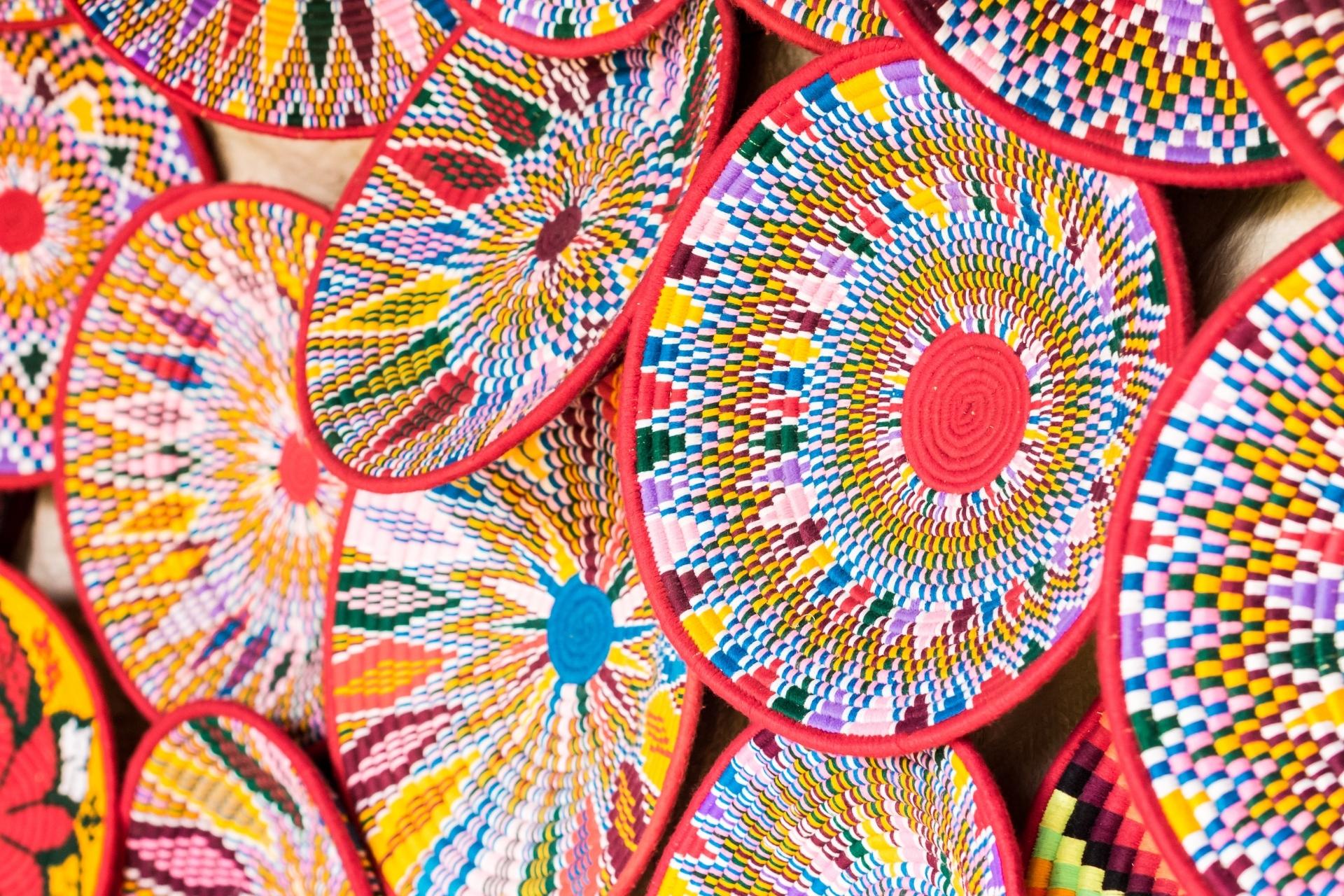
- Harari Coiled Wall Baskets (Mot & Sahana): Originating within the UNESCO World Heritage walled city of Harar Jugol, Harari baskets are celebrated worldwide as museum-grade fine art. Woven with extraordinary thread density, they feature intricate mandala-like geometric patterns, radiant primary pigments, and ceremonial designs historically displayed on the white plaster walls of Harari living quarters (Gē Gār).
- The Iconic Mesob (Communal Dining Table & Cover): The architectural crown of Ethiopian basketry. Shaped like an hourglass or cylinder topped with a conical woven lid, the Mesob serves as the ceremonial vessel for sharing injera meals. Available in miniature decorative sizes (20–30 cm diameter) up to full-scale dining centerpieces (80–100 cm height).
- Oromo & Gurage Coiled Vessels: Renowned for tight spiral coiling techniques, contrast stitching, and ergonomic utility. These baskets often incorporate natural cowrie shells, wooden bases, and protective leather binding for storage of grains and precious household spices.
- Agelgil (Leather-Wrapped Provisions Carrier): Traditional goatskin or sheepskin reinforced baskets historically used by travelers and shepherds, blending handwoven vegetable fiber cores with rustic tanned leather straps and brass buckles.
2. Sustainable Botanical Materials & Natural Dyeing
In an era demanding uncompromising environmental responsibility, Ethiopian woven baskets represent the gold standard of circular, biodegradable craftsmanship:
- Indigenous Wild Grasses (Sindedo): The structural foundation of Ethiopian coiled baskets relies on Sindedo, a wild, long-stemmed highland grass prized for tensile flexibility, durability, and resistance to brittle cracking over decades.
- Palm Frond Strips & Sisal Wrapping: Skilled artisans split flexible date palm leaves and natural sisal fibers into razor-thin strands, meticulously wrapping them over the core grass coils to build seamless structural walls and intricate surface motifs.
- Botanical & Eco-Safe Dyeing: Traditional artisans extract deep yellow hues from turmeric, vibrant reds from madder root and acacia bark, rich blacks from charcoal and river mud, and luminous greens from wild leaves. For contemporary commercial export orders requiring exact Pantone consistency and UV colorfastness, non-toxic, eco-certified reactive dyes are also expertly utilized.
3. Global Market Applications in Modern Interior Design
International commercial demand for Ethiopian basketry spans several lucrative lifestyle and commercial sectors:
- Bohemian & Modern Rustic Wall Galleries: Flat and shallow decorative coiled baskets (Harari Mot and shallow trays) are trending globally as textured wall art focal points in luxury apartments, boutique hotels, and eco-lodges across California, Paris, London, and Tokyo.
- High-End Fair Trade Boutiques: Conscientious lifestyle retailers like Anthropologie, Ten Thousand Villages, and independent fair-trade stores command premium retail pricing ($45 to $350+ per basket) by highlighting verifiable artisan provenance and female economic empowerment.
- Hospitality & Cultural Dining Establishments: Authentic Ethiopian and pan-African restaurants across North America and Europe require commercial quantities of durable, handcrafted Mesob tables and injera service trays to deliver authentic cultural guest experiences.
- Architectural Storage & Table Centerpieces: Organic cylindrical hampers, bread baskets, and ornamental fruit bowls add tactile warmth and artisanal character to Scandinavian, Japandi, and minimalist interior schemes.
4. Quality Grading, Inspection & Export Packing
Exporting fragile, handwoven organic textiles across continents requires meticulous attention to post-harvest curing and physical packing:
- Stitch Density & Structural Rigidity: Export-grade baskets are evaluated by coil tension, regularity of stitching, and symmetry. A premium Harari basket should exhibit zero looseness, flexing minimally when gently pressed.
- Moisture Control & Fumigation: All vegetable fiber crafts undergo controlled dehumidification prior to containerization to maintain internal moisture below 10%. Shipments are accompanied by official phytosanitary inspection certificates issued by the Ministry of Agriculture, confirming freedom from wood-boring insects, pests, and fungal spores.
- Nesting & Volumetric Space Optimization: Because basketry is light but bulky, unmanaged shipping can incur prohibitive volumetric freight charges. YAMA's export packaging team coordinates modular nesting dimensions (packing small baskets inside medium and large vessels), reducing overall cubic volume by up to 60% and lowering ocean or air freight costs per unit.
- Desiccant Barrier Packing: Each master carton is lined with waterproof heavy-gauge polyethylene and packed with high-absorption clay desiccant bags to prevent moisture absorption during maritime transit through humid tropical shipping lanes.
5. Sourcing Ethically with YAMA Export Services
By purchasing Ethiopian handicrafts through YAMA Export Services, international importers support direct, transparent economic livelihoods for rural women artisans and urban cooperative guilds in Harar, Addis Ababa, and the Rift Valley. We guarantee fair trade living wages, eliminate predatory middleman markups, and manage complete export clearance—including Chamber of Commerce Certificates of Origin, phytosanitary declarations, customs duty paperwork, and DHL/air freight or FCL ocean container logistics.
To request our wholesale artisan crafts catalog, discuss custom colorway productions, or receive sample consignments, contact our cultural export desk at +251 98 898 9805 or email yamaexport@gmail.com.