When planning earthmoving, road building, or quarry operations in Ethiopia, selecting between a wheel loader and a crawler bulldozer is one of the most critical decisions for project managers and contractors. While both machines move substantial volumes of earth, aggregate, and rock, their mechanical designs, ground pressure, pushing dynamics, and cycle times serve distinct operational purposes. Choosing incorrectly can result in higher fuel burn, excessive track or tire wear, and costly project delays.
Drawing on over 25 years of equipment supply across Ethiopia's diverse topography from the rocky highlands to the sandy lowlands of the Rift Valley YAMA Construction Machinery breaks down the key technical and financial factors to help you make the right equipment choice.
1. Core Mechanical Differences & Mobility
The fundamental distinction between wheel loaders and bulldozers lies in their traction system and primary work function:
- Wheel Loaders (Tires & Bucket): Engineered for high-speed mobility, material lifting, and cycle loading. Mounted on large heavy-duty pneumatic tires, wheel loaders (such as the Caterpillar 950M or Hitachi ZW220) travel rapidly between stockpiles and dump trucks (up to 35–40 km/h), making them indispensable for loading gravel, crushed stone, and excavated soil into tipper trucks.
- Bulldozers (Continuous Steel Tracks & Blade): Engineered for massive drawbar pull, ground penetration, and raw pushing power. Heavy crawler tracks distribute the machine weight over a large surface area, generating low ground pressure and immense traction even on steep inclines, loose mud, or jagged basalt rock.
2. When to Choose a Bulldozer in Ethiopia
A crawler bulldozer is the unmatched champion for rough, preliminary site work where maximum tractive effort is required:
- Road Pioneering & Cut-and-Fill: Slashing virgin terrain, clearing thick vegetation, and cutting through rocky hillsides for Ethiopian Roads Authority (ERA) road corridors.
- Heavy Land Clearing & Stripping: Stripping dense topsoil and breaking up hardpan or caliche layers using heavy single-shank or multi-shank rear rippers.
- Rough Grading & Spreading: Pushing massive volumes of sub-base material across expansive roadbeds or dam embankments.
- Challenging Ground Conditions: Operating on steep mountain slopes, deep mud, or loose sand where rubber-tired machines would slip and lose traction.
3. When to Choose a Wheel Loader
A wheel loader is the primary production machine once terrain is relatively stable and material needs to be moved or loaded efficiently:
- Quarry & Aggregate Loading: Scooping blasted rock, sand, and gravel from crushing plants and loading directly into dump trucks with rapid cycle times (typically 20–30 seconds per pass).
- Material Rehandling & Batching: Charging hoppers at asphalt plants, concrete batching plants, and block manufacturing yards in industrial zones like Bole Lemi, Kilinto, or Hawassa.
- Stockpile Management: Building and leveling aggregate stockpiles, backfilling trenches, and carrying utility pipes or equipment across job sites.
- Site Clean-up & Urban Mobility: Self-mobilizing between nearby urban construction sites in Addis Ababa without requiring a lowbed trailer.
4. Operating Cost and Maintenance Comparison
Understanding total cost of ownership (TCO) in the Ethiopian operating environment requires evaluating wear items and fuel consumption:
- Undercarriage vs. Tires: Undercarriage wear represents up to 50% of a bulldozer's lifetime maintenance cost, particularly when operating in abrasive silica or basalt terrain. Wheel loaders avoid track maintenance, though heavy-duty tire protection chains are recommended when handling sharp blasted rock in quarries.
- Fuel Consumption: Wheel loaders generally consume less fuel per ton of material moved due to rolling efficiency on compact ground, whereas bulldozers operate under constant high drawbar loads with higher hourly fuel burn.
- Transport Logistics: Bulldozers require heavy multi-axle lowbed trailers and transport permits for relocation across regional boundaries, adding mobilization overhead.
5. Fleet Synergy: Why Most Projects Need Both
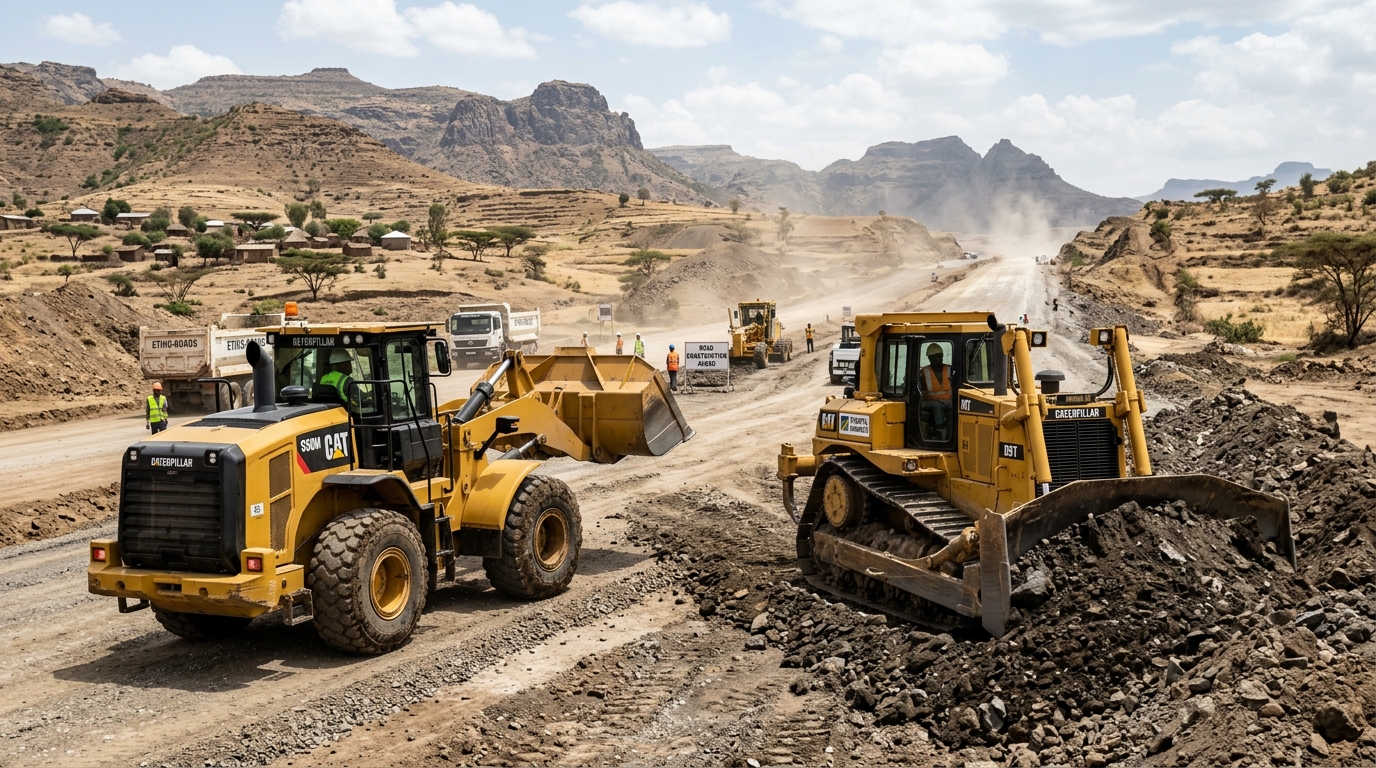
On large-scale infrastructure projects across Ethiopia, wheel loaders and bulldozers operate as complementary partners rather than direct competitors. The bulldozer cuts the grade, rips hard rock, and pushes material into piles, while the wheel loader loads the stockpiled material into dump trucks for haulage. Sizing these machines proportionally ensures smooth workflow without bottlenecking truck fleets.
Procurement and Rental Support from YAMA
Whether your project calls for a 20-ton wheel loader for high-speed batching or a 35-ton crawler bulldozer with ripper for heavy road pioneering, YAMA Import, Export and Construction Machinery Rental provides certified equipment with nationwide field support. Contact our technical team at +251 98 898 9805 or visit our branches in Addis Ababa, Mekelle, Bahir Dar, Dire Dawa, and Hawassa to discuss rental terms and machine specifications tailored to your site.