Compaction is one of the most critical and most underestimated stages in Ethiopian road construction and earthworks. Whether you are building a rural feeder road, a federal highway sub-base, or the clay core of a dam embankment, achieving the specified density of the compacted layer directly determines how long the structure will last before settling, cracking, or failing under traffic. Using the wrong roller or running insufficient compaction passes is one of the most common and costly mistakes on Ethiopian construction sites.
YAMA Construction Machinery's technical team breaks down the main categories of compaction equipment, how to match them to the material and application, and what to look for when renting or procuring a roller for your project.
1. Why Compaction Matters More in Ethiopia
Ethiopia's diverse geology presents particular compaction challenges. Expansive black cotton soils in the lowlands can swell and heave dramatically when moisture content shifts, while highly plastic clays in highland areas require careful moisture conditioning before rolling. Rocky sub-grades with large aggregate pockets demand heavier vibratory rollers to seat material properly, and the wide range in annual rainfall means that compaction windows can be narrow on some projects. Getting compaction right at each layer prevents the settlement, rutting, and pavement failure that shortens road life and drives rehabilitation costs.
2. Main Categories of Compaction Equipment
The Ethiopian market uses four primary roller types, each suited to specific materials and project phases:
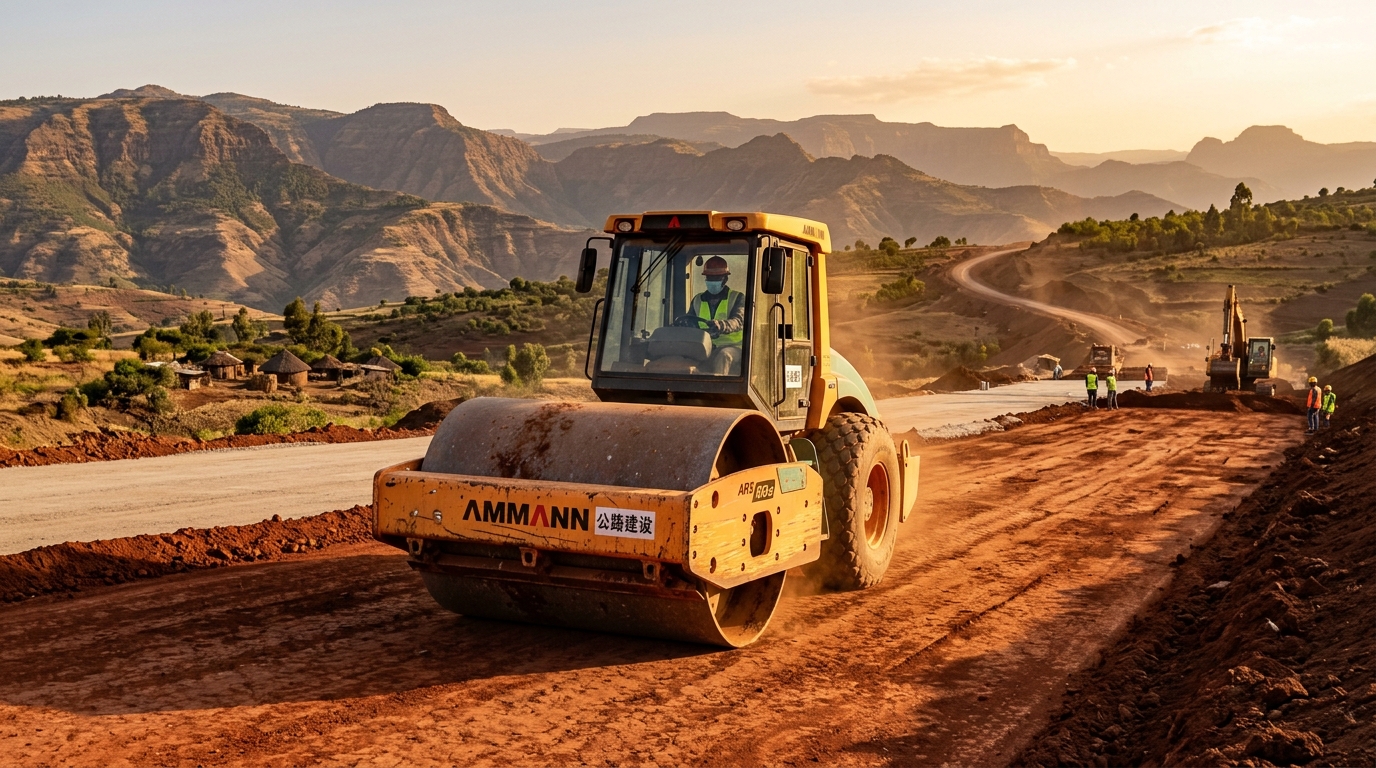
- Smooth Drum Vibratory Rollers (Single and Tandem): The most versatile and widely used roller type on Ethiopian road projects. Vibratory action combined with deadweight achieves high density on granular sub-base, crushed stone base, and asphalt wearing courses. Tandem vibratory rollers (with smooth drums front and rear) are the standard choice for compacting hot mix asphalt layers. Single drum vibratory rollers with a pneumatic rear axle are well suited for granular materials during road base preparation.
- Pneumatic Tyre Rollers (PTR): Multi-wheeled rubber tyre rollers apply a kneading action that seals the surface of asphalt layers and ensures good interlock in granular materials. They are commonly used as a finishing pass after vibratory compaction on asphalt wearing courses and are particularly effective on soil-aggregate mixtures.
- Padfoot (Sheepsfoot) Vibratory Rollers: Equipped with a drum covered in protruding steel pads, padfoot rollers penetrate and compact cohesive soils such as clay and silt from the bottom of the layer upward rather than from the surface down. They are the correct choice for compacting embankment fills and clay sub-grades on Ethiopian dam and road projects where smooth drum rollers would simply seal the surface without achieving full-layer density.
- Plate Compactors and Rammers: Walk-behind compaction equipment for confined spaces: trench backfill around utility pipes, footings, and areas inaccessible to ride-on rollers. These are essential on urban infrastructure projects in Addis Ababa and other cities where bulk rolling equipment cannot maneuver.
3. Matching Roller to Material and Layer
Using the right roller for the material type and layer thickness is where many site managers go wrong. Key guidelines:
- Granular sub-base and crushed stone base course: Single drum vibratory roller (8–12 ton operating weight), with compaction in layers no deeper than 200–250 mm per pass.
- Cohesive embankment fill (clay, silty clay): Padfoot vibratory roller to achieve full-depth compaction without surface sealing that traps moisture in lower layers.
- Asphalt binder and wearing course: Tandem smooth drum vibratory roller for breakdown and intermediate passes, followed by a pneumatic tyre roller for finish and sealing. Temperature management is critical, rolling must be completed while asphalt is within the specified temperature window.
- Trench and confined backfill: Plate compactor or jumping jack rammer in thin lifts of 100–150 mm, with particular attention to density testing adjacent to pipe and structure foundations.
4. Compaction Testing: Don't Skip It
Compaction is invisible once a layer is covered by the next one. Density testing at specified intervals using nuclear density gauges or sand cone tests is the only way to verify that the required Proctor density has been achieved before proceeding. On ERA-standard road projects, density tests are required at defined frequency per layer and material type. Skipping testing creates liability and often results in costly rework when quality audits catch under-compacted layers during project certification.
5. Operating Conditions Specific to Ethiopia
Ethiopian site conditions affect roller performance in ways that aren't always accounted for in standard operating guides:
- High altitude: Engine performance degrades at elevation. Rollers operating above 2,000 m above sea level require properly maintained air filtration systems and may need engine derating checks to avoid overloading the powertrain.
- Extreme dust: Air filter servicing intervals must be shortened significantly on dry-season projects. A clogged air filter is the fastest route to engine damage on roller equipment operating in dusty quarry or highland environments.
- Wet season compaction: Wet season compaction of fine-grained soils is one of the most difficult field conditions. If moisture content is above optimum, additional roller passes will not achieve the required density and can actually weaken the material. Moisture conditioning, or stopping earthworks during heavy rain events, is sometimes the only correct answer.
Rental and Procurement Support from YAMA
YAMA Construction Machinery provides smooth drum vibratory rollers, padfoot rollers, tandem asphalt rollers, and pneumatic tyre rollers for rental and sale across Ethiopia. Our technical team can assist with roller selection based on your material type, layer specification, and project timeline. Contact us at +251 98 898 9805 or visit our branches in Addis Ababa, Mekelle, Bahir Dar, Dire Dawa, and Hawassa to request a quotation.