Edible oil is one of Ethiopia's most consistent and high-volume import commodities, driven by population growth, rapid urbanization, and rising household incomes that are increasing per capita consumption of refined cooking oil across the country. With domestic oilseed processing capacity covering only a fraction of national demand, Ethiopia imports substantial volumes of refined palm olein, sunflower oil, and soybean oil from Malaysia, Indonesia, Ukraine, Russia, and Argentina every year.
YAMA Import Services has managed edible oil import operations in Ethiopia for over a decade, handling bulk ISO tank shipments, flexitank container imports, and retail-packaged commodity lots through established customs clearance and logistics partnerships. This guide covers the key elements of importing edible oils into Ethiopia.
1. Ethiopian Edible Oil Market Overview
Ethiopia's cooking oil market is dominated by refined palm olein, which accounts for the majority of imported edible oil volume due to its competitive price point relative to sunflower and soybean oils. Key demand drivers include:
- A population exceeding 120 million with projected continued growth, driving steadily rising food demand
- Rapid urbanization particularly in Addis Ababa, Dire Dawa, Hawassa, and secondary cities shifting household cooking patterns toward refined edible oils
- A growing food manufacturing and food service sector requiring consistent commercial-grade oil supply
- Government price sensitivity — edible oil is considered a basic commodity, making supply continuity critical
2. Key Source Countries and Oil Specifications
The primary international supply sources for refined edible oil imported into Ethiopia are:
- Malaysia and Indonesia (Palm Olein): The world's largest palm oil producers supply RBD (Refined, Bleached, and Deodorized) Palm Olein to Ethiopia. Iodine value, free fatty acid content (max 0.1%), moisture (max 0.1%), and peroxide value are the primary quality parameters for import certification.
- Ukraine and Russia (Sunflower Oil): Ukraine is the world's largest sunflower oil exporter. RBD sunflower oil from the Black Sea region is the primary source for Ethiopian imports, with shipping through Djibouti transit.
- Argentina and Brazil (Soybean Oil): RBD soybean oil for industrial food processing applications is sourced from South American producers, with longer transit times to Djibouti compared to Asian sources.
3. Shipping Formats: ISO Tanks and Flexitanks
Bulk liquid edible oil is imported into Ethiopia in two primary container formats:
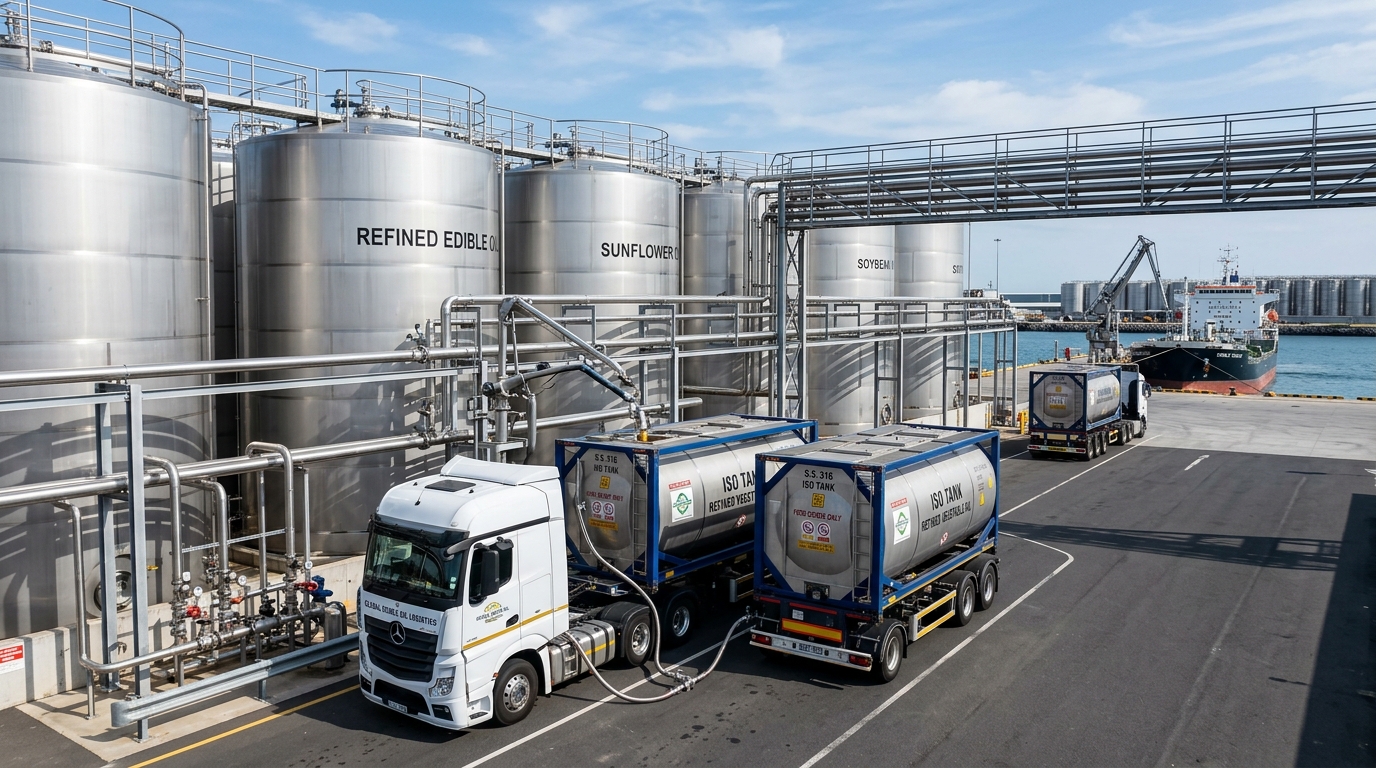
- ISO Tank Containers (T11 or T14 food grade): Stainless steel pressure tanks mounted in a standard 20-foot ISO frame, holding approximately 20–24 MT of liquid edible oil per unit. ISO tanks are the preferred format for large-volume imports due to superior hygiene standards, reusability, and lower product contamination risk.
- Flexitank (Bulk Liquid Container Liner): A single-use food-grade polyethylene liner installed inside a standard 20-foot dry container, holding 16–22 MT of liquid oil. Flexitanks offer lower shipping costs per MT compared to ISO tanks, making them suitable for importers without specialized ISO tank discharge infrastructure.
- Retail Packaging (Bottles and Jerry Cans): Pre-packaged edible oil in 1-liter PET bottles, 5-liter jerry cans, or 20-liter drums is imported for direct retail market distribution, allowing direct market entry without local repackaging infrastructure.
4. Foreign Currency and Import Licensing Requirements
Edible oil import into Ethiopia requires foreign currency allocation through the banking system:
- Letter of Credit (LC): The standard payment mechanism for Ethiopian edible oil imports. The importer opens an LC through a licensed Ethiopian commercial bank, which allocates the required foreign currency from available hard currency holdings.
- Import License: A valid foreign trade import license with food commodities (edible oil) included in the product scope, registered with the Ministry of Trade and Regional Integration (MoTRI).
- Ethiopian Food and Drug Administration (EFDA) Registration: Imported edible oils must be registered with EFDA and meet Ethiopian standard specifications for food safety parameters including aflatoxin levels, heavy metals, and food additive compliance.
5. Customs Clearance at Modjo Dry Port
Edible oil shipments arriving through Djibouti Port are transited under bond to Modjo Dry Port or Kality Customs Terminal for customs assessment and clearance. The clearance process involves submission of customs import declaration with correct HS code classification, duty and tax assessment, quality inspection by Ethiopian Standards Institute (ESI) laboratory, EFDA clearance certificate, and release to bonded warehouse or the importer's own storage facility.
Partner with YAMA for Edible Oil Imports
YAMA Import Services manages complete edible oil import operations — from international supplier sourcing and LC documentation to shipping arrangement (ISO tank or flexitank), customs clearance at Modjo, and delivery to your warehouse or repackaging facility. Contact our import trade desk at +251 98 898 9805 or yamaexport@gmail.com for a competitive CIF Djibouti import quotation.