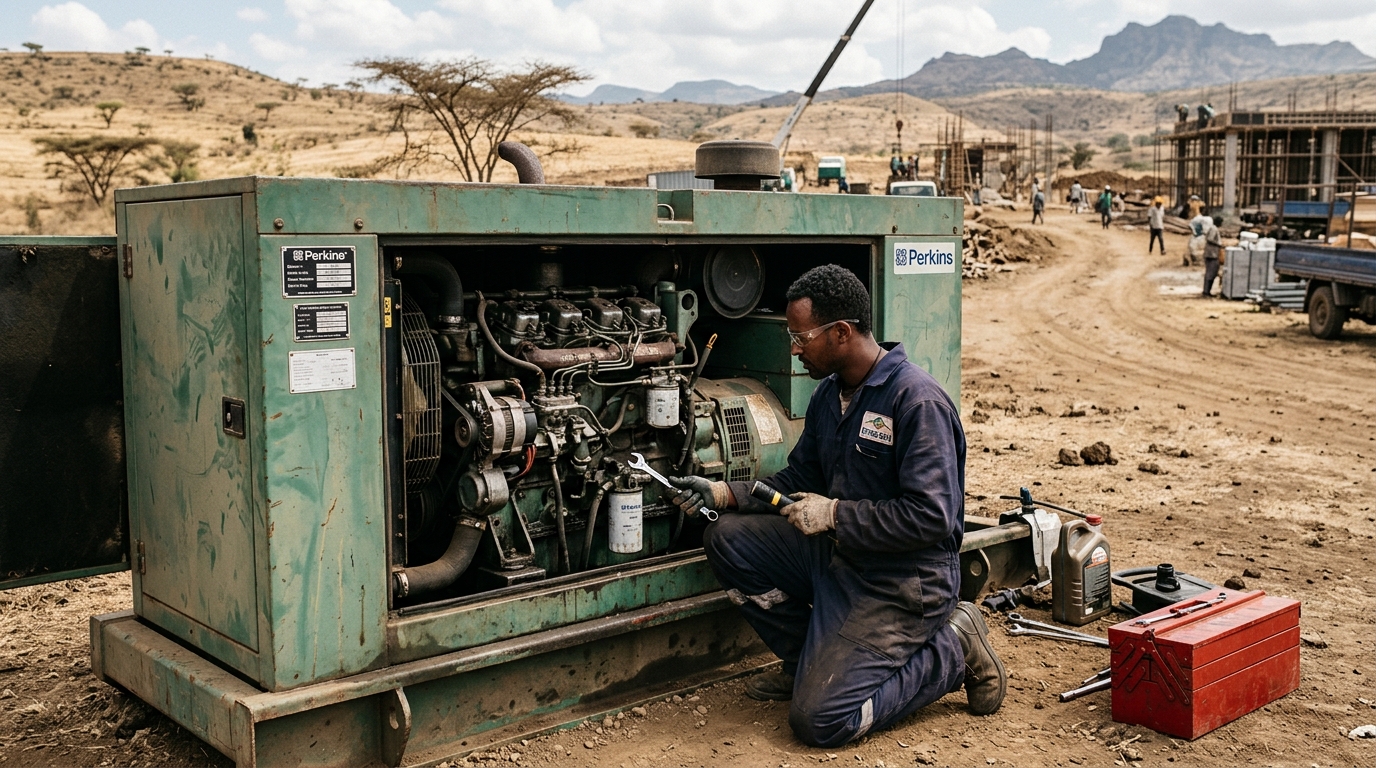
Diesel generators operating across Ethiopia face operating conditions that standard factory maintenance schedules are not fully designed for. High altitude sites above 2,000 metres, abrasive highland dust, extreme temperature swings between day and night, wet season flooding, and remote deployment far from qualified technicians all combine to shorten service intervals, increase wear rates, and raise the risk of unexpected failures at exactly the moments when reliable power is most critical. At YAMA Construction Machinery, our service engineers maintain generator fleets across Ethiopia's most demanding operating environments. This guide draws on that experience to give operators and fleet managers a practical maintenance framework suited to local conditions.
1. The Ethiopian Operating Environment: What Makes It Different
Understanding why standard maintenance intervals often fall short in Ethiopia is the starting point for building a maintenance program that actually works:
- High altitude and reduced air density: Above 1,500 m ASL, reduced air density means diesel engines receive less oxygen per intake stroke, reducing combustion efficiency and effective power output. Turbocharged generators compensate to some degree, but engines working hard in thin air run hotter and produce more unburned fuel residue in the combustion chamber and exhaust system. Sites at 2,000–3,000 m (including much of Addis Ababa, the highlands of Amhara, and Tigray) should reduce oil change intervals by 20–30% compared to sea-level specifications.
- Abrasive dust: Ethiopian highland and Rift Valley dust is particularly fine and abrasive. It penetrates air filtration systems faster than in lower-dust environments, accelerating cylinder and piston ring wear if not managed aggressively. Air filter servicing is the single highest-return maintenance activity for generator engines in dusty Ethiopian deployments.
- Temperature extremes: Day-night temperature swings of 15–25°C are common at altitude, cycling thermal stress through engine seals, gaskets, and hose connections. Remote highland generators starting cold after an overnight shutdown are under the most stress in the first minutes of operation, making pre-heat and warm-up procedures more important than in temperate climates.
- Wet season flooding and moisture ingress: Generators deployed in low-lying or poorly drained areas during Ethiopia's rainy season face risks of moisture contamination in fuel tanks, electrical enclosures, and alternator windings. This is one of the most common causes of unexpected generator failures in the June–September period.
- Fuel quality variability: Fuel quality across Ethiopia can vary significantly between suppliers, with higher water content and particulate contamination levels than in controlled supply chains. Fuel polishing and water separator servicing are more critical than in markets with tightly controlled fuel quality standards.
2. Adjusted Service Intervals for Ethiopian Conditions
The following intervals are recommended for generators deployed in typical Ethiopian operating conditions. Where conditions are particularly severe (high dust, high altitude, continuous prime power operation), shorten intervals further:
- Air filter inspection: Every 100–150 hours (standard OEM may specify 250–500 hours for lower-dust environments). Replace or clean when restriction indicator shows red, regardless of hours.
- Engine oil and oil filter: Every 150–200 hours for altitude and high-load deployments (standard OEM is typically 250 hours). Use the viscosity grade appropriate for site temperatures — thinner grades for cold highland starts, slightly heavier grades for hot continuous operation at low altitude.
- Fuel filter and water separator: Every 150 hours, or when water separator bowl shows water accumulation. Drain water separator daily on wet season deployments.
- Coolant system check: Monthly. Verify coolant concentration (typically 33–50% antifreeze/corrosion inhibitor for altitude temperature protection), clean radiator fins of dust and debris, and check for internal scale or electrolysis corrosion in the coolant loop.
- Electrical connections and alternator inspection: Every 250 hours, with particular attention to terminal corrosion, wiring insulation condition, and any signs of moisture in the alternator housing or control panel enclosure.
- Load bank testing: Quarterly for generators running significant standby periods (light load or no-load operation). Running a generator under full load for 1–2 hours burns off carbon deposits and wet stacking build-up in lightly loaded diesel engines, preventing power output degradation over time.
3. Daily Operator Checks: The First Line of Defense
Many generator failures in Ethiopia could be caught before they become costly by a trained operator doing a disciplined pre-start walkround. Key checks before each startup:
- Check engine oil level. If low, identify why — consumption between checks is a warning sign.
- Check coolant level and look for signs of leakage around hose connections and the radiator.
- Check fuel level and drain the water separator bowl if wet season conditions apply.
- Inspect air filter restriction indicator.
- Listen to the engine during the first minutes of operation — unusual noise, excessive smoke (white, blue, or black), or unstable frequency are all early symptoms worth recording and reporting before they escalate.
- Check battery charge indicator and condition. Cold highland mornings put the most stress on starting batteries.
4. Fuel Management in Remote Deployments
Remote generator sites in Ethiopia — mining camps, road construction camps, and telecom installations — face particular challenges with fuel quality and storage. Practical steps to protect the fuel supply:
- Store fuel in sealed, clearly labelled containers away from direct sunlight and elevated temperatures, which accelerate fuel degradation.
- Allow delivered fuel to settle for at least 30 minutes before drawing from the tank, to let water and sediment sink to the bottom.
- Fit inline fuel polishing filters to transfer pumps wherever fuel quality is variable.
- Mark and rotate fuel stock to avoid storing fuel longer than 3–6 months without stabilizer treatment.
5. Wet Season Specific Precautions
Ethiopia's main rainy season (June–September in most regions) is the highest-risk period for moisture-related generator failures. Recommended precautions:
- Elevate portable generators and fuel tanks off the ground on wooden or steel platforms to prevent flooding contact.
- Ensure generator enclosures and weatherproof canopies are sealed, with no gaps around cable entries.
- Check alternator insulation resistance monthly during wet season — a reading below 1 MΩ indicates moisture contamination requiring drying out before the next operation cycle.
- Inspect electrical panel gaskets and cable gland seals at each wet season start.
6. When to Call a Technician
Some symptoms require professional attention rather than continued operation. Stop the generator and contact a qualified technician if you observe: sustained heavy black or white exhaust smoke, sudden loss of power output or frequency stability, oil pressure warning, high coolant temperature alarm, unusual mechanical noise (knocking, rattling, or grinding), or alternator output voltage that is out of specification range. Continuing to run a generator through these symptoms almost always converts a repairable issue into a major engine or alternator overhaul.
Service and Support from YAMA
YAMA Construction Machinery's service team supports generator fleets across Ethiopia with scheduled preventive maintenance contracts, genuine spare parts supply, and mobile field service to remote sites. Our technicians are trained on Perkins, Cummins, FG Wilson, and other leading generator brands. Contact us at +251 98 898 9805 or email yamaexport@gmail.com to discuss a maintenance contract for your generator fleet.